
How to Choose Hookah Charcoal: A Buyer Decision Framework
A B2B framework for choosing hookah charcoal: size, ash, burn time, odour, ignition, packaging and total cost — with a decision table and conditional recommendations.
Updated 2026-10-07
Knowledge hub · buyer education
Eight cornerstone guides that teach B2B buyers how to compare, verify and source charcoal — written against public regulations, published standards and sourcing practice. No product claims, no fabricated specs.
01 · buying
A B2B framework for choosing hookah charcoal: size, ash, burn time, odour, ignition, packaging and total cost — with a decision table and conditional recommendations.
Updated 2026-10-07
A buyer's comparison of 25 mm and 26 mm hookah charcoal cubes: dimensional tolerance, heat and burn trade-offs, bowl fit, and packaging implications.
Updated 2026-10-07
Why odor and ignition behaviour are the experience metrics that decide hookah charcoal acceptance, how they relate to volatile matter and feedstock purity, and how to test them before buying.
Updated 2026-10-07
The carbonization process behind coconut shell charcoal: temperatures, yield ratios, and how process conditions shape fixed carbon, ash and burn behaviour — for buyers who need to evaluate supplier process claims.
Updated 2026-10-07
Hookah charcoal and coconut activated carbon come from the same shell but are different products with different processes, markets and prices. A guide for buyers who want to avoid confusing the two supply chains.
Updated 2026-10-07
Quick-light and natural coconut charcoal are different products for different buyers. How the accelerant coating changes ignition, burn time and taste — and why wholesale buyers need to know which one their customers expect.
Updated 2026-10-07
02 · sourcing
A step-by-step workflow for sourcing charcoal from China: supplier qualification, sample verification, Incoterms, payment, dangerous-goods shipping and compliance risk.
Updated 2026-10-07
Minimum order quantity explained for charcoal buyers: why MOQs exist, the real cost drivers behind them, and how to negotiate a first order without fabricating supplier terms.
Updated 2026-10-07
How charcoal is loaded into shipping containers: tonnage ranges by container and packaging, packing density, dangerous-goods constraints, and export packaging choices.
Updated 2026-10-07
The packaging formats used for coconut shell charcoal — retail boxes, bulk bags, master cartons and private-label print — and how each affects moisture, cost and container loading.
Updated 2026-10-07
What private label charcoal actually involves — the workflow, minimum order quantities, printing options and the regulatory and packaging considerations a brand buyer must manage.
Updated 2026-10-07
A buyer's guide to the documents behind a charcoal import — certificate of origin, third-party testing, fumigation and destination-country requirements — with the limits of what each document proves.
Updated 2026-10-07
The four material levers behind coconut charcoal pricing — moisture, volatile matter, ash and fixed carbon — plus the supply-side geography that sets the floor. A buyer's guide to reading price quotes correctly.
Updated 2026-10-07
Coconut charcoal is a Class 4.2 self-heating substance under UN 1361. What the 2025-2026 IMDG changes mean for buyers, why a mis-declared booking is a supply-chain risk, and what to check before shipment.
Updated 2026-10-07
A practical pre-shipment inspection checklist for charcoal imports: sampling, size check, moisture at origin, packaging integrity, DG labelling and photo documentation — the checks that catch problems before they are on the water.
Updated 2026-10-07
Charcoal has no expiry date, but it has a decay date. How moisture, sunlight and packaging decide usable shelf life, why sealed storage is quoted at 24 months, and how to store stock in the warehouse.
Updated 2026-10-07
03 · quality
What to compare between coconut shell charcoal suppliers: which specifications matter, how to request and read a spec sheet, and how to judge batch consistency.
Updated 2026-10-07
Ash content explained for charcoal buyers: what the metric measures, how it is tested, why low ash matters for burn and emissions, and what to specify.
Updated 2026-10-07
Why there is no universal burn-time number for coconut charcoal: the factors that change it, how to compare claims fairly, and what to ask suppliers.
Updated 2026-10-07
What moisture content means in charcoal, how oven-dry testing (ASTM D3173-style) measures it, and why water content affects ignition, burn and your landed cost.
Updated 2026-10-07
What fixed carbon means in charcoal, why it is calculated rather than tested, how it relates to calorific value, and how to check a supplier's proximate-analysis figures.
Updated 2026-10-07
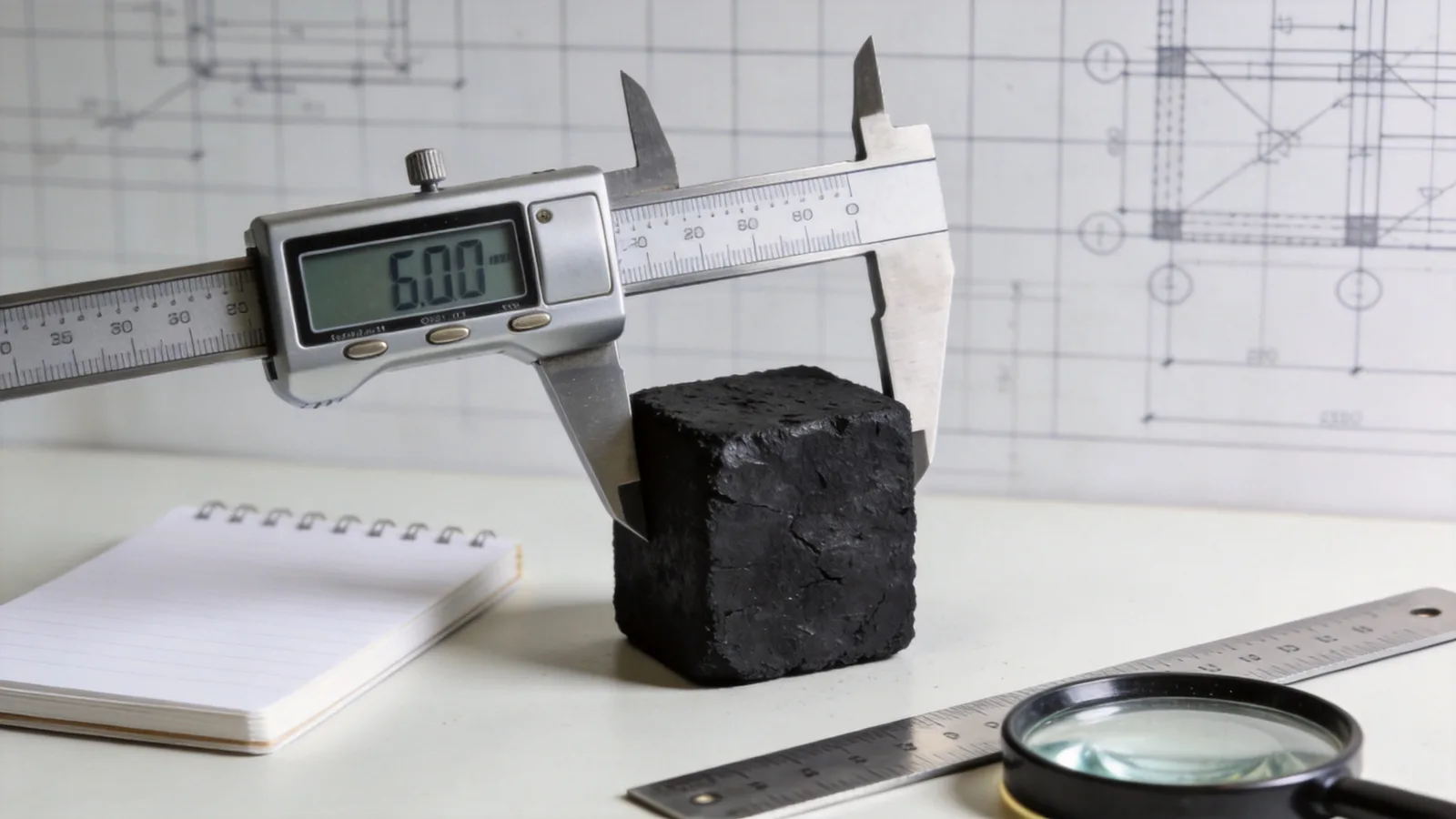
What size tolerance means for hookah charcoal cubes, why a ±0.5 mm band matters for packaging and burn consistency, and how to verify a supplier's size claim.
Updated 2026-10-07
Chinese suppliers often attach test reports referencing GB/T 12496 methods. What that standard family covers, how it maps to the ASTM methods international buyers know, and what to check before accepting a certificate.
Updated 2026-10-07
Briquette density, cube size and heat output are linked. How density is stated, why 1.2-1.3 t/m³ is the working range for pressed cubes, and how a buyer uses density to judge burn consistency.
Updated 2026-10-07